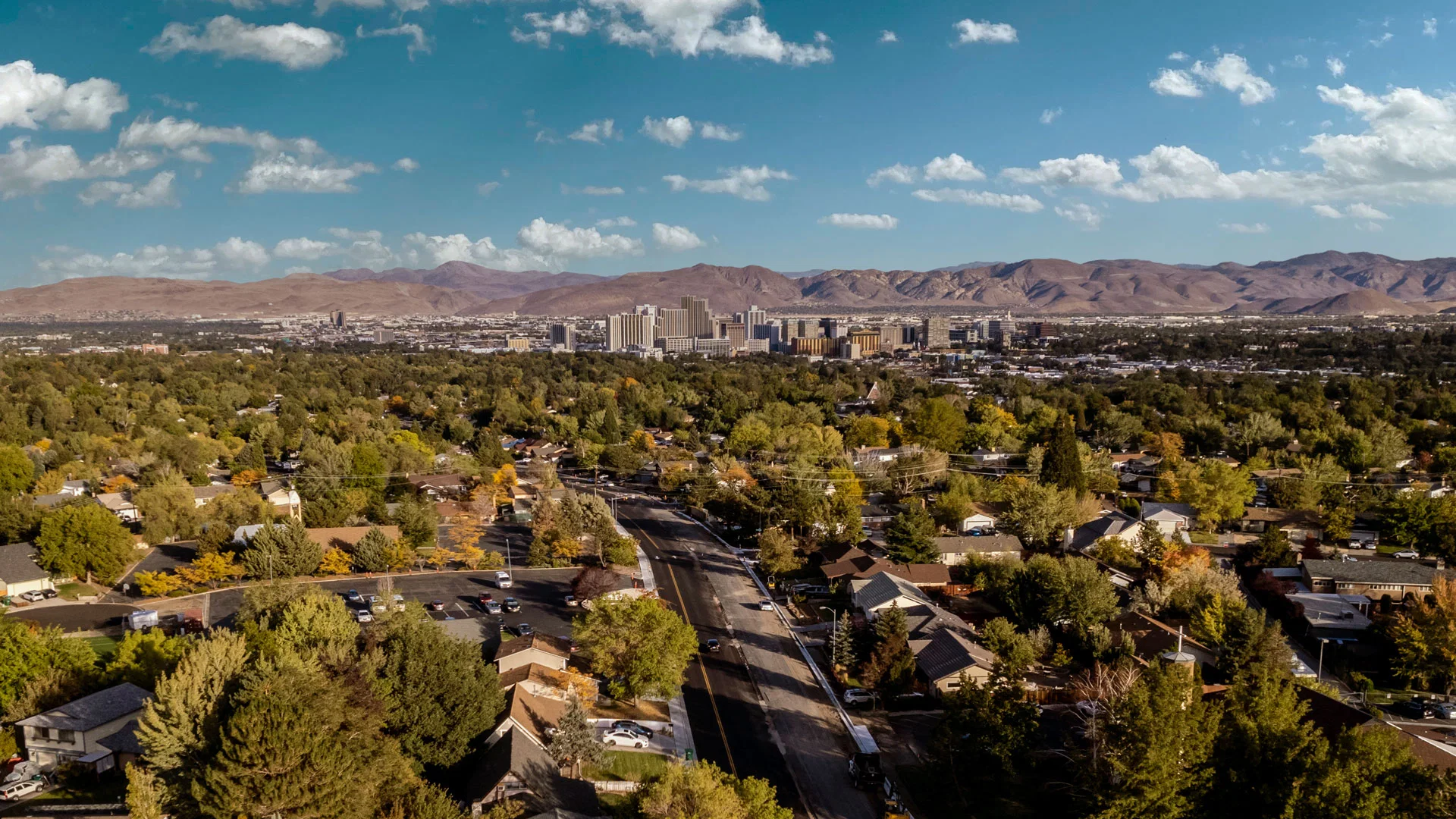
South Reno often works when the event wants an easier, more polished corridor without pulling fully into the Tahoe resort story or the casino core. The district is about convenience with a different tone.
In Reno, South Reno, NV works best when the team uses that south-corridor posture deliberately.
Reno trade show market
Reno's event ecosystem is mature. The location runs against known patterns in venues, labor, and local production capacity.
Some weeks pull regional buyers, others international. Either way, the location runs on the same four fundamentals: graphics, services, labor, building plan.
Where Reno shows actually happen
Among Reno venues, labor models differ, so do rigging approvals, drayage, and posted move-in windows. The location plan flexes to whichever building hosts the show.
National Bowling Stadium. The National Bowling Stadium features 78 lanes and a 32,000-square-foot event concourse.
The Stadium can be configured for up to 4,000 people and also includes a 172-seat theater in the Dome.
National Bowling Stadium suits brand activations, sports industry events, team building programs, private buyouts with entertainment.
Reno-Sparks Livestock Events Center is one of the anchors.
Grand Sierra Resort and Casino: it has more than 200,000 square feet of flexible meeting space and 45 meeting rooms.
Who handles what during the Reno install window
There is no single labor model for Reno trade shows.
The repeatable location labor process: pull the manual, slot scope into the categories it defines, order what the venue sells, schedule the rest. Skip a step and surprises follow.
At Reno Tahoe destination positioning, the destination offers unique planning flexibilities and cost savings for hosts, exhibitors, and attendees, which supports a more flexible public posture than strict union-only convention markets.
The location's plan matches each venue's published requirements.
What's included in the project scope
The location's specifics shape which phases need the closest watch.
Specific locations pull more from one block than another.
Tight handoffs upstream produce calm install days. Loose handoffs produce chaotic ones. The pattern holds for every location.
The location stays in production-ready condition between dates.
Scope clarity also includes the exclusions: organizer fees, client travel, and anything the client already has on contract — lead-capture, CRM, giveaways. Those run alongside the location, not inside it.
From first call to strike
First task: nail the show, the floor plan, the deadline, and the success definition for the location. Everything else flows from there.
Each step matches the location's requirements.
Production starts after venue confirmation.
They run labor, graphic checks, sequencing, and the location's daily report.
Doors open turns the location into live ops.
The venue's posted strike window dictates the pull-out timeline. A same-day debrief captures field notes so improvements land in the next show, not three months later.
Budget and timeline
Pricing on the location comes from real line items — fab or rental, graphics, show services, labor, freight, travel. Round-number quotes typically hide something.
Pricing comes down to six choices — build path, footprint, venue charges, graphics, freight, supervision days. A small turnkey rental and a large custom island sit at opposite ends of that range.
Clean schedules start 4-5 months out for custom and 2-3 months for rentals. Tighter windows still work but push rush premiums and narrow the material list for the location.
Outcomes we optimize for
Reno success criteria for the location: punctual install, first-walk pass on inspection, smooth show hours, same-day strike shipout.
The location is an upstream input to those numbers, not the metric itself.
A location can be beautifully built and still under-perform without disciplined floor staffing.
The advantage of a local Reno team
Reno-based, full-stack production: fabrication, rental inventory, graphics, and on-site execution for the location all live in one shop.
Local-vs-national shows up most at install. A Reno team solves a location issue in a drive-time round trip; a national vendor ships overnight if at all.
South Reno, NV — what the area looks like for events
South Reno, NV is part of the Reno event market. Shows and meetings book here alongside the larger Reno calendar.
South Reno, NV sits in the South Reno Convention Corridor area.
Production for South Reno, NV shows starts with the same brief we run for the rest of Reno: venue specifics, show dates, footprint, outcome. Freight paths and local vendor availability are the variables that shift from the city core.
Frequently asked questions
Do you work at the Chateau at Incline Village?
Yes.
How does labor work in Reno?
It runs venue by venue.
Are there local permits or right-of-way issues to watch?
City and county permits cover sidewalk closures, oversize loads, generator use, and any branded activation that pulls power off the venue grid. Permits are filed alongside the venue paperwork rather than left to the last week.
What's the closest rigging and graphics vendor footprint?
The work routes through Reno-based shops with Reno-Tahoe stock on hand. Same-day reprints, replacement parts, and emergency rigging crews are within driving distance — not flown in from out of region.
How are crew lodging and per diems planned for this area?
Show-week hotel availability around this submarket gets blocked early. Per diems run on the published market rate and crew schedules are built so labor doesn't burn through OT before doors open.